
Murillo, hot springs and Frailejones forest
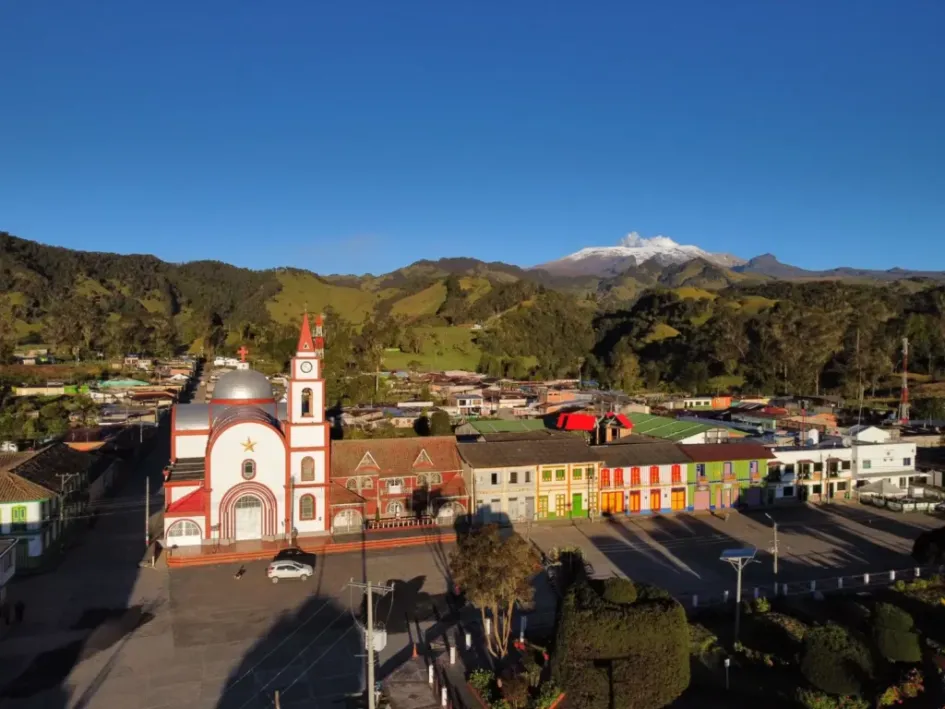
Murillo, Tolima

Murillo is one of the most representative high-Andean towns in northern Tolima. Its cold climate, the mountains that surround it, and the town’s peaceful atmosphere make it a good starting point for exploring the landscapes that connect the high-Andean forest with the páramo of the Nevado del Ruiz. The urban center is compact, with steep streets, local shops, and family-run lodgings that offer a simple stay closely tied to daily life in the municipality.

Mountain agriculture remains a central part of the territory, so it’s common to find small farms, potato and vegetable plots, and local markets where farmers from rural villages arrive with fresh produce. This rural dynamic coexists with the steady presence of travelers looking for hot springs, short trails, and natural viewpoints.

Hot springs

One of the main attractions in Murillo is its hot springs. On the outskirts of the town there are areas with volcanic-origin waters, known for their colors and varying temperatures. Several farms and small establishments offer access to hot spring pools and natural basins in simple settings, where visitors can bathe, relax, and observe up close how geothermal activity shapes the territory.

In addition to the thermal baths, some routes allow you to see fumaroles, warm soils, and spots where steam rises between the rocks. These short walks help visitors better understand the town’s connection with the Nevado del Ruiz.

This destination, still largely untouched by mass tourism, offers an exclusive experience for nature and tranquility lovers, as it is surrounded by the majestic landscape of Los Nevados National Natural Park. Its high elevation allows for spectacular views and the enjoyment of volcanic-origin waters.

The Frailejones forest

A few kilometers from Murillo lies one of the most representative high-Andean landscapes: the Frailejones Forest. This ecosystem, located in the transition zone between high-Andean forest and páramo, contains a high concentration of these emblematic plants, which play a crucial role in regulating much of the water that supplies the region.

The route to the forest can be done by vehicle up to certain points, and then continued on foot along marked trails. During the walk, visitors can observe changes in vegetation, small streams, and open areas that reveal the magnitude of the Lagunilla River canyon—one of the key geographical features of the municipality.